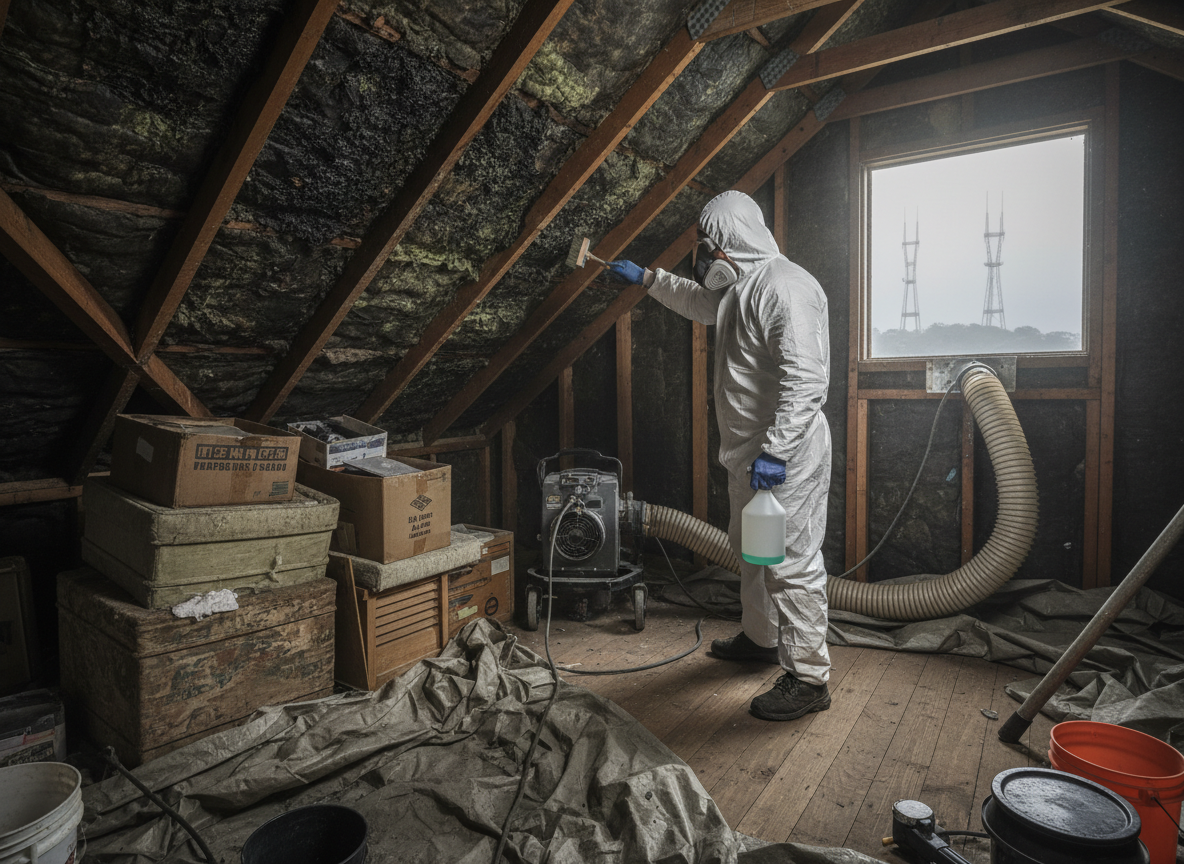
Twin Peaks sits in San Bernardino County at elevation where winter snow loads and freeze-thaw cycles frequently push water under older asphalt or metal roofs. Attics in homes built from the 1960s onward often lack modern ventilation, letting meltwater soak insulation and rafters. We begin every job by mapping moisture with thermal imaging, then isolate the affected bays so spores do not drift into living spaces below.
Many properties near Lake Arrowhead Road and along CA-189 still have original fiberglass batts that trap moisture against OSB sheathing. When mold colonies reach the plywood, we remove and dispose of saturated material rather than attempting surface cleaning. Negative-air machines vent through roof jacks or gable ends to keep pressure negative inside the attic while work continues.
Crestline and Twin Peaks both see rapid temperature swings that can re-condense on uninsulated ductwork, restarting growth within weeks. After physical removal we apply EPA-registered antimicrobials only to wood members that test dry, then improve ridge and soffit venting to match current mountain climate demands. Homeowners receive a written moisture log showing pre- and post-drying readings before insulation is replaced.
Technician insight
In Twin Peaks the thing that catches most people out with attic mold remediation is how quickly snow melt from the north-facing slopes along CA-189 finds its way under thirty-year-old shingles and sits against the ridge board; homeowners often seal the obvious ceiling stains but never open the attic to find the hidden colony growing on the back side of the OSB.
Ice Dam Leak on Blackfoot Trail
A homeowner noticed ceiling discoloration after a heavy March snow. We found meltwater had traveled under the ridge cap and soaked three rafter bays of fiberglass insulation. We removed the wet material, dried the rafters to 11 percent moisture content, upgraded the ridge vent, and the attic stayed dry through the following winter.
How it works
- 1
Inspection and Moisture Mapping
We enter the attic from outside access points, photograph every rafter bay, and record moisture levels in insulation, sheathing, and framing.
- 2
Containment and Air Filtration
Plastic sheeting and negative-air machines isolate the work zone so spores stay out of the living area while we remove affected materials.
- 3
Removal of Moldy Materials
Saturated insulation, drywall, and any compromised wood are cut out and bagged for disposal following San Bernardino County waste rules.
- 4
Drying and Antimicrobial Treatment
Industrial air movers and dehumidifiers bring wood moisture content below 12 percent before any remaining surfaces receive targeted treatment.
- 5
Ventilation Upgrade and Final Testing
We add or enlarge ridge and soffit vents, then retest to confirm the attic stays dry through the next freeze-thaw cycle.
Pricing
Cost depends on square footage affected, depth of insulation removal, and any structural wood repairs needed; we provide an upfront written scope before work begins.