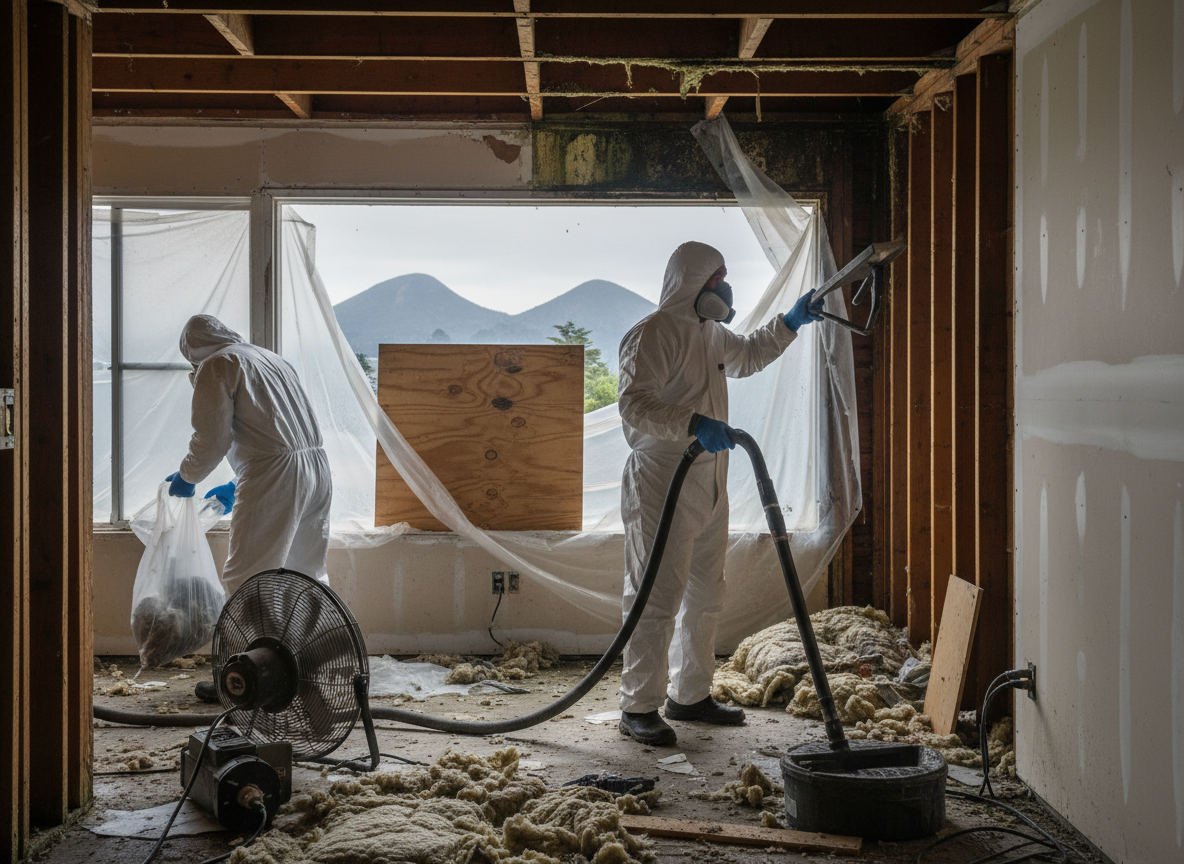
Twin Peaks sits at elevation in the San Bernardino Mountains where cold snowy winters followed by warm spring thaws drive repeated moisture cycles through roofs, attics, and crawlspaces. Older cabins and homes built on sloped lots often lack modern vapor barriers, allowing meltwater to travel along framing and pool behind drywall or under subfloors. When water damage occurs, visible staining is only the start; hidden colonies can form within 48 hours in the dense insulation common to these structures. Remediation requires isolating affected zones, removing saturated materials, and applying EPA-registered antimicrobials while maintaining negative air pressure to keep spores from migrating into living spaces shared with nearby Crestline and Lake Arrowhead properties.
The local terrain adds complexity. Steep driveways and narrow access roads in Twin Peaks limit equipment placement, so technicians frequently work with portable HEPA air scrubbers and moisture meters rather than large truck-mounted units. Soil around many homes retains water longer because of the granite-heavy ground, keeping crawlspace humidity elevated even after the initial leak is fixed. This means post-remediation verification must include multiple readings over several days, especially after the next snowfall, to confirm the structure has dried below 15 percent moisture content before any new finishes are installed.
San Bernardino County building practices for mountain homes also affect scope. Many properties predate current energy codes, so walls may contain knob-and-tube wiring or cellulose insulation that holds moisture differently than modern materials. Technicians must document every layer removed and coordinate with owners on disposal of contaminated debris at approved county facilities. Skipping these steps risks re-growth when summer humidity spikes or when winter storms return.
Seasonal Moisture Patterns
In Twin Peaks the critical window for mold after water damage runs from first thaw through early summer. Snow sitting on roofs for weeks creates ice dams that push water under shingles; once temperatures rise, that water travels down rafters and soaks ceiling cavities. Homeowners often discover the problem only when ceilings sag or odors appear. Scheduling follow-up moisture checks after the next freeze-thaw cycle catches any residual dampness before new growth starts.
Technician insight
In Twin Peaks, the thing that catches most people out with Mold remediation after water damage is how snow melt travels along the underside of roof decking and soaks into the knee-wall cavities of older A-frame and cabin-style homes; once it reaches the insulation, the only fix is cutting it out because the dense packing holds water against the framing for weeks.
Attic Mold After Spring Thaw
A Twin Peaks homeowner noticed a musty smell in an upstairs bedroom after the first warm spell. Inspection revealed water had entered through an ice dam and traveled behind the knee wall, saturating cellulose insulation and growing mold on the back of the drywall. Crews contained the attic, removed the wet insulation and affected drywall sections, treated framing with antimicrobial, and ran drying equipment until readings stabilized. Follow-up checks after the next freeze confirmed no recurrence.
How it works
- 1
Initial Assessment
Technician arrives 24/7, maps all wet and suspect areas using moisture meters and thermal imaging, and identifies hidden mold growth behind finishes common in Twin Peaks mountain homes.
- 2
Containment Setup
Plastic barriers and negative air machines isolate the work zone to prevent spores from reaching unaffected rooms, accounting for tight floor plans typical of older local cabins.
- 3
Material Removal and Cleaning
Saturated drywall, insulation, and trim are removed and bagged; remaining surfaces receive antimicrobial treatment and HEPA vacuuming.
- 4
Drying and Verification
Air movers and dehumidifiers run until readings drop below target levels; final clearance testing confirms the space is dry and mold-free before reconstruction begins.
Pricing
Pricing varies with the size of hidden damage, number of affected rooms, and access challenges created by mountain terrain and older construction.