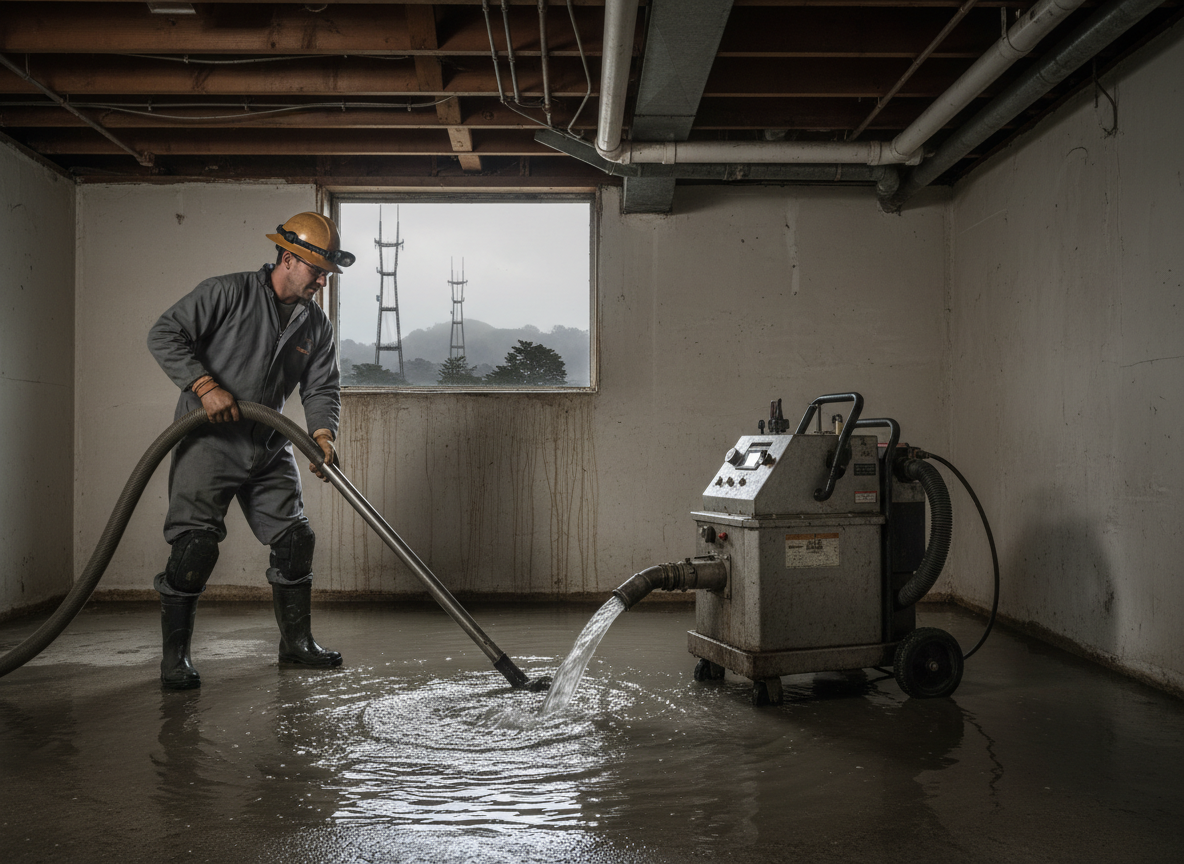
Twin Peaks sits at elevation in San Bernardino County where winter snow loads on roofs and driveways often lead to ice dams and sudden thaws. Water extraction crews must account for cold temperatures that slow evaporation and keep moisture trapped inside older cabin-style homes with crawl spaces and pier foundations common along CA-189. Portable extractors and moisture meters are essential because basements and lower levels stay colder longer than the surrounding air.
Heavy spring runoff from surrounding peaks frequently overwhelms French drains and sump systems in Lake Arrowhead and Crestline properties. Technicians extract water room by room, paying close attention to hardwood floors and particleboard subfloors that swell quickly in mountain humidity. Leaving even a quarter inch of water behind can cause cupping within days once temperatures climb into the seventies during summer.
Older Twin Peaks homes built before modern grading codes often have negative slopes directing meltwater toward foundations. Extraction here includes removing water from under cabinets and behind baseboards where it migrates along the slope. Crews document hidden pockets with infrared cameras because visible puddles disappear fast once pumps start but residual moisture remains in wall cavities.
Seasonal Mountain Considerations
Winter snow followed by rapid warming creates repeated extraction calls on the same properties year after year. Crews schedule follow-up visits after the first melt cycle to catch water that reappears from attic insulation or roof decking.
Technician insight
In Twin Peaks the thing that catches most people out with water extraction is the way snow melt keeps re-entering through the same low spots in older foundations along the highway; once you pull the visible water the ground stays saturated for weeks because the clay soil and cold temps hold moisture right against the piers.
Crestline Cabin After Heavy Melt
Water entered a 1970s cabin through the garage slab during a rapid thaw. Extraction revealed standing water under the laundry room and hallway subfloor. Crews removed the water, opened baseboards, and set drying equipment; the homeowner avoided floor replacement once readings returned to normal.
How it works
- 1
Site Assessment
Technicians arrive within hours, locate the water source, and map affected materials using moisture meters and thermal imaging.
- 2
Standing Water Removal
High-volume pumps and wands extract bulk water from floors, carpets, and low areas before it soaks deeper into subfloors.
- 3
Hidden Moisture Extraction
Walls and cabinets are opened where needed; water is pulled from cavities and underlayment to prevent hidden mold growth.
- 4
Drying Setup
Air movers and dehumidifiers are placed based on the mountain climate to finish drying before secondary damage occurs.
Pricing
Cost depends on water volume, number of affected rooms, and whether hidden cavities require opening; upfront quotes provided on site.