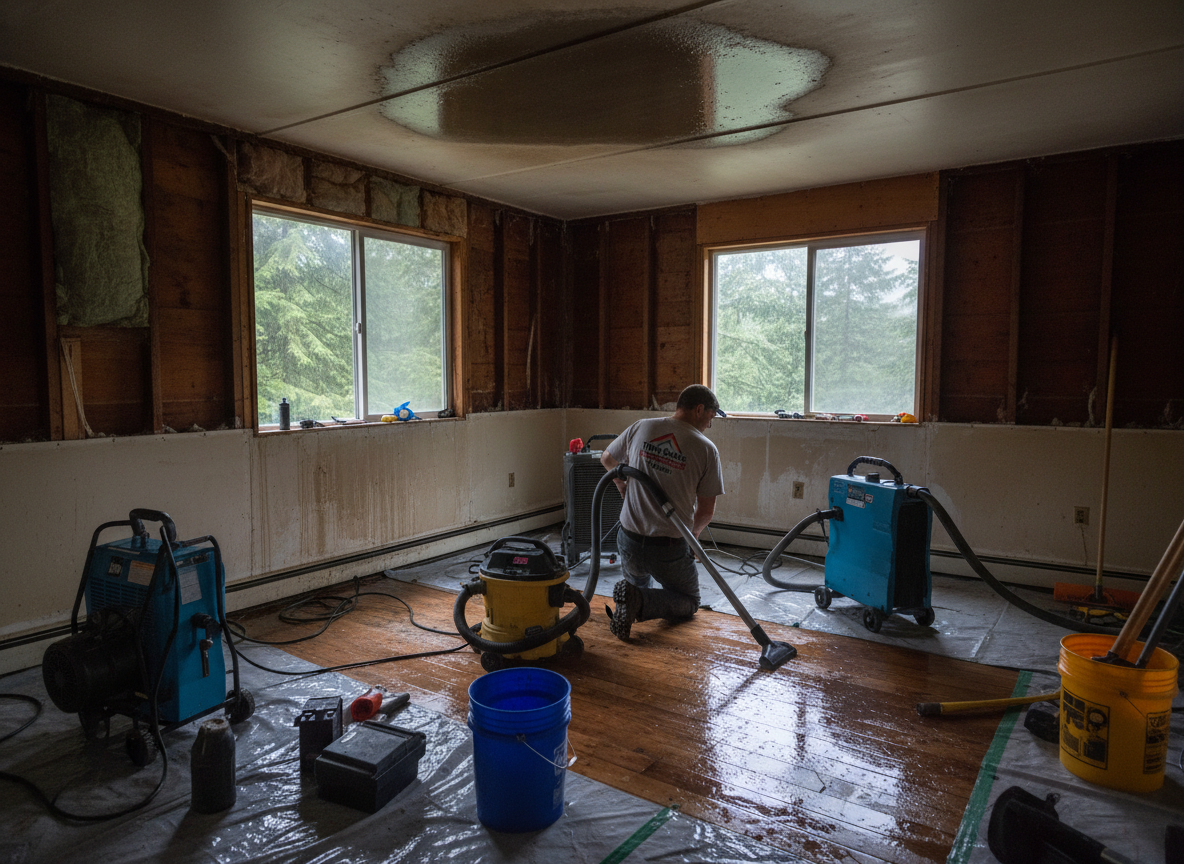
Twin Peaks sits at elevation in the San Bernardino Mountains where winter temperatures regularly drop below freezing along routes like CA-189. This causes supply lines in crawl spaces and exterior walls to burst, sending water into subfloors of 1960s-1980s cabins and A-frames common here. Restoration crews must account for the steep terrain that limits equipment access and the slow drying rates caused by cold, dense air trapped under snow load.
Leaks often travel along the slope of lots toward Lake Arrowhead or Crestline drainage paths, saturating insulation and rim joists before homeowners notice ceiling stains. Technicians remove baseboards and drill small inspection holes to map moisture without tearing out entire walls, then use low-grain dehumidifiers sized for the small square footage of these homes. Failure to address the mountain-specific vapor drive can leave residual moisture that reappears during the first spring thaw.
After extraction, crews focus on the transition zones where heated interior air meets the cold exterior envelope, a detail that frequently leads to hidden mold on the back side of drywall. Work includes pulling wet carpet pads, treating affected particleboard subfloors, and installing temporary heaters to bring wood moisture content below 12 percent before any finishes are replaced.
Technician insight
In Twin Peaks, the thing that catches most people out with water leak restoration is snow melt running under the house along the natural grade of lots near the 189, soaking rim joists that stay hidden until the next cold snap forces another pipe to split.
Burst Supply Line Under Twin Peaks Cabin
A homeowner in Twin Peaks noticed water pooling near the foundation after a heavy snow. Inspection revealed a frozen line that had split and sent water along the slope into the crawl space. Crews extracted the water, dried the joists and insulation, and replaced the damaged section before the next freeze cycle.
How it works
- 1
On-Site Assessment
Technicians arrive 24/7, trace the leak source using moisture meters, and document moisture migration through the sloped lots typical in Twin Peaks.
- 2
Water Extraction
Standing water is removed with portable pumps suited to tight crawl spaces and steep driveways common along CA-189.
- 3
Drying and Monitoring
Air movers and dehumidifiers run while daily moisture readings track progress through the dense insulation found in local cabins.
- 4
Repairs and Prevention
Damaged materials are replaced and pipe insulation added to reduce repeat freeze failures during snowy winters.
Pricing
Cost depends on leak location, volume of water, and how many structural layers are affected; upfront quotes provided after inspection.