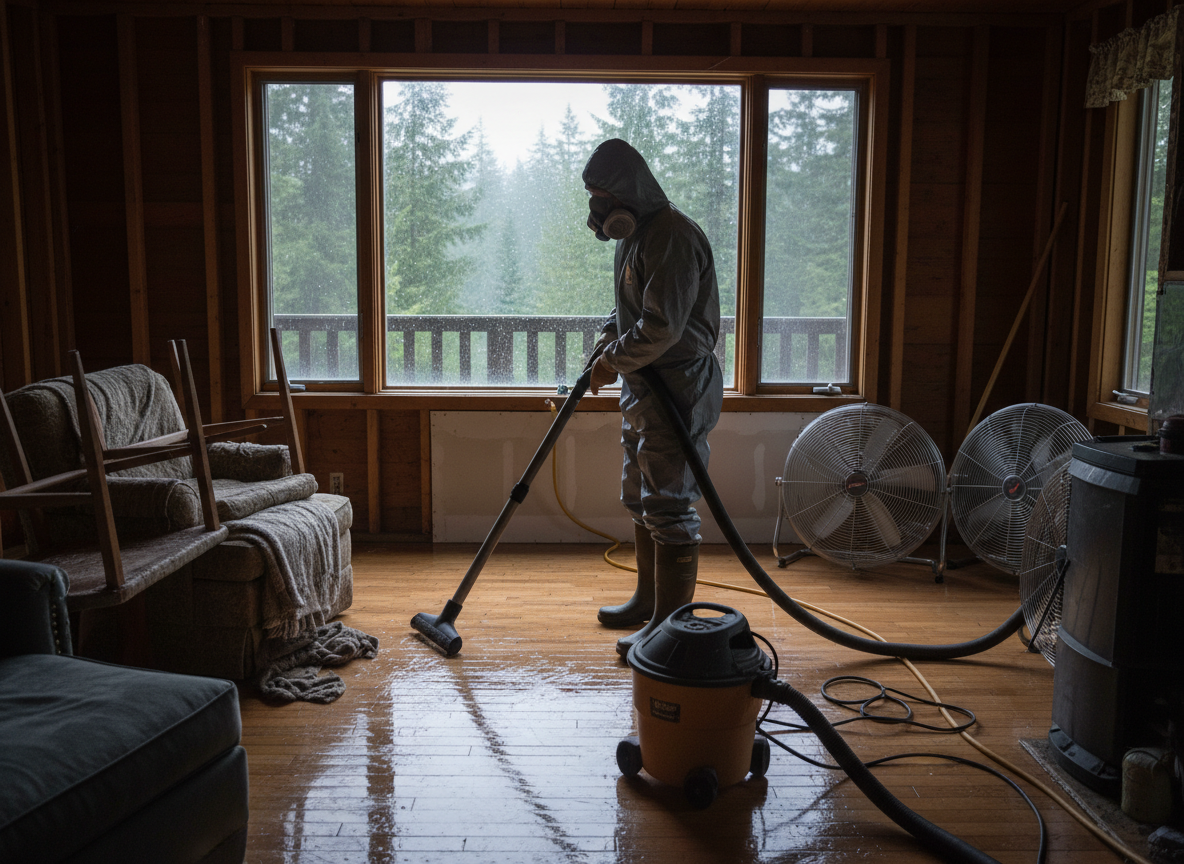
Twin Peaks sits at elevation in the San Bernardino Mountains where cold winters regularly drop below freezing. Older cabins and homes built along Highway 189 often have crawlspaces and attics with limited insulation, allowing supply lines to freeze and burst overnight. When that happens water can travel unseen along joists and into subfloors before homeowners notice. Our crews arrive from the 26100 CA-189 shop within the hour, use moisture meters to trace the full path, and remove standing water before it soaks into the particleboard cabinets common in 1970s mountain construction.
Snowmelt in early spring adds another layer of risk. Runoff pools against foundations on the steeper lots near Crestline Road, then seeps through cracked stem walls that were never designed for constant moisture. We extract water from these hidden pockets with submersible pumps and air movers positioned to avoid pushing damp air into living spaces. Because many Twin Peaks homes lack vapor barriers under the slab, we also place dehumidifiers for several days and check neighboring rooms that share the same slab to prevent secondary mold growth.
Lake Arrowhead and Crestline residents face the same freeze-thaw cycles but often have longer drive times for out-of-town companies. Being based in Twin Peaks lets us reach both communities quickly and return for follow-up readings without extra travel charges. We document every affected material so homeowners can show insurers exactly which sections of flooring and drywall were removed rather than guessing at the extent of hidden damage.
Technician insight
In Twin Peaks the thing that catches most people out with emergency water cleanup is how fast a small attic pipe burst turns into soaked ceiling drywall across multiple rooms because the steep rooflines and lack of attic insulation let water travel downhill before it drips.
Frozen supply line in Twin Peaks cabin
A homeowner on Highway 189 noticed water stains on the living-room ceiling after a week of sub-freezing nights. We traced the leak to an uninsulated line in the attic, extracted water from the insulation and subfloor, removed two sections of drywall, and ran drying equipment for four days until moisture readings matched the rest of the house.
How it works
- 1
Arrival and Safety Shutoff
We reach the property from our Twin Peaks location, locate the main water valve, and stop the flow before water travels further into walls or floors.
- 2
Moisture Mapping
Infrared cameras and pin meters trace water paths through the older crawlspaces and attics typical of mountain homes near Highway 189.
- 3
Extraction and Removal
Standing water is pumped out, saturated insulation and carpet pad are removed, and air movers begin drying the remaining structure.
- 4
Daily Monitoring
We return each day to check moisture levels until readings match unaffected areas, preventing hidden mold in San Bernardino County mountain construction.
Pricing
Upfront quote after inspection; final cost depends on volume of water, number of affected rooms, and days required for drying.