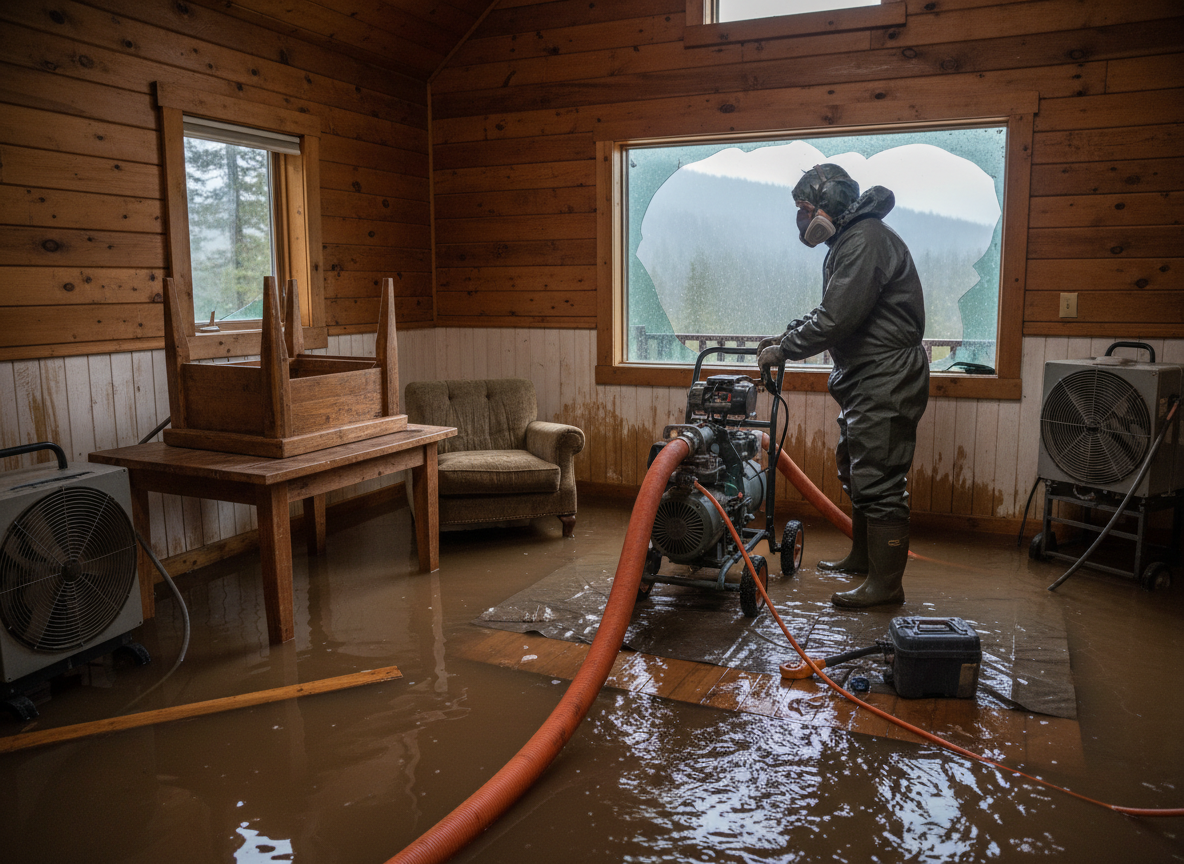
Twin Peaks sits at elevation in San Bernardino County where spring snow melt from the surrounding peaks often sends water into crawl spaces and lower levels of older wood-frame homes. These properties, many built before modern grading standards, have shallow foundations and limited drainage that let water linger against sill plates. When floodwater carries silt from the hillsides, it saturates insulation and subfloors quickly, requiring extraction within hours to prevent mold in the cold, humid mountain air.
We begin with moisture mapping using thermal imaging to locate hidden pockets behind knotty-pine paneling common in local cabins. After removing standing water, we focus on drying the rim joists and any particleboard underlayment that swells permanently when wet. In homes near the 26100 CA-189 corridor, narrow driveways and steep lots mean equipment must be carried in by hand, extending setup time compared with flatter neighborhoods in Crestline.
San Bernardino County code requires permits for structural drying when more than 25 percent of a floor system is affected, so we document every step for inspectors. Homeowners often overlook the risk of ice dams forming on roofs during the sudden warm spells that follow heavy snow; when those dams break, water can enter through ridge vents and travel down interior walls. We always check attic insulation for saturation before sealing any exterior penetrations.
Technician insight
In Twin Peaks, the thing that catches most people out with flood restoration services is the way snow melt keeps seeping back into the same low spots for weeks after the storm. Older homes along the highway often have dirt crawl spaces that act like sponges, so you have to keep returning to re-dry the joists even after the initial extraction looks finished.
Spring Melt into Crawl Space
Heavy March runoff from the ridge above a Twin Peaks cabin entered the crawl space through an unsealed vent. We found saturated insulation pressed against the rim joists and standing water against the foundation. After extracting the water and running drying equipment for four days, we replaced the wet insulation and sealed the vents to stop recurring moisture from the next snow cycle.
How it works
- 1
Emergency Assessment
We arrive within hours, identify the water source, and measure moisture levels in Twin Peaks homes built on sloped lots.
- 2
Water Extraction
High-volume pumps remove standing water while protecting steep driveways common along CA-189.
- 3
Drying and Monitoring
Industrial air movers and dehumidifiers run until readings drop below 12 percent, with daily checks for hidden meltwater pockets.
- 4
Sanitizing and Restoration
Affected materials are treated or replaced, then we restore flooring and walls to match original mountain-cabin finishes.
Pricing
Cost depends on water volume, affected square footage, and whether hidden damage exists behind paneling or in crawl spaces.