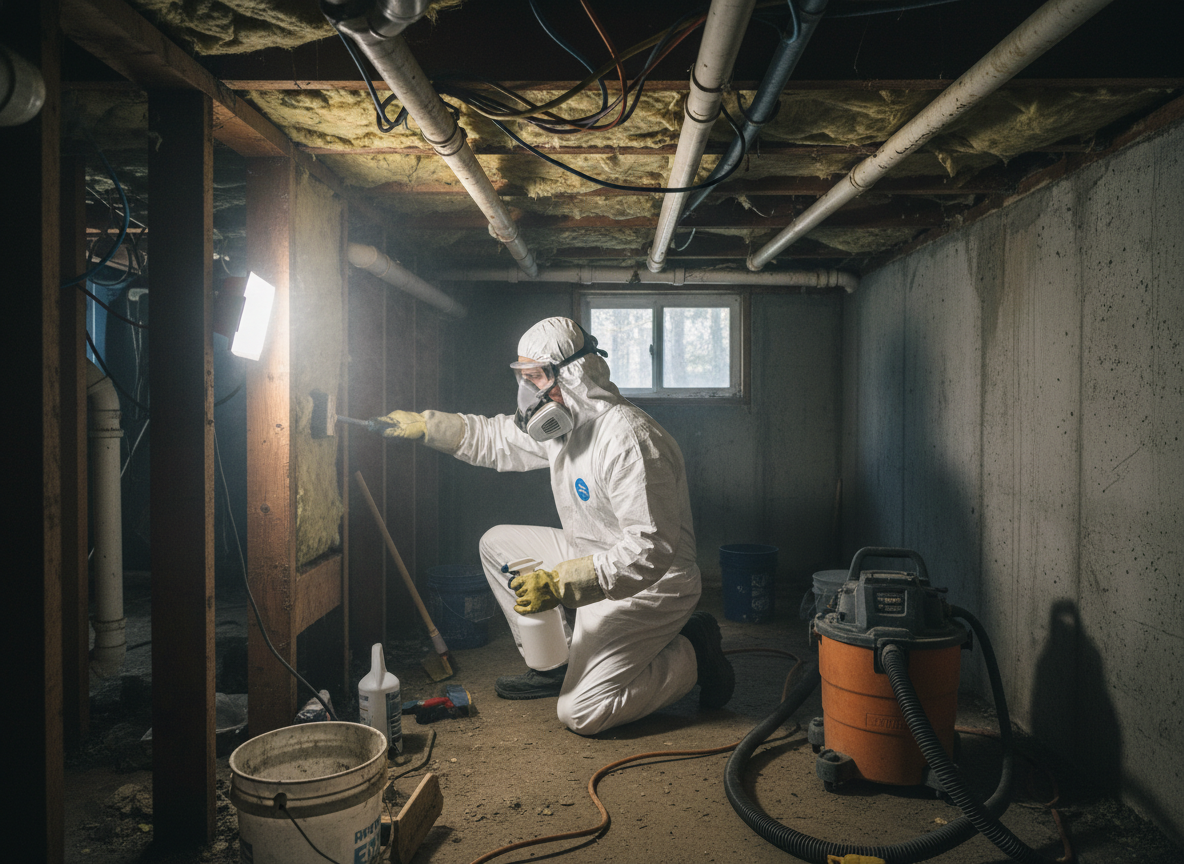
Twin Peaks sits at elevation in the San Bernardino Mountains where cold snowy winters meet warm summers. This swing drives condensation in crawl spaces beneath older wood-frame cabins and ranch homes. Moisture collects on joists and insulation when warm interior air meets chilled soil and foundation walls. Left unchecked, it feeds mold colonies that spread into living areas through floor registers and electrical penetrations. Proper removal requires sealing the space, removing saturated insulation, and installing vapor barriers rated for mountain humidity levels rather than standard residential film.
Access in Twin Peaks often means working around steep driveways and tight crawl spaces with low clearance common in homes built before the 1980s. Snowmelt from surrounding slopes can pool against foundations near Crestline and Lake Arrowhead roads, keeping soil damp well into spring. Technicians must map plumbing leaks and roof runoff points before any cleaning begins. Simply spraying surfaces fails when hidden mold sits behind rim joists or in dirt floors that never fully dry. Containment tents and negative air machines prevent spores from entering the main living space during the work.
After physical removal, drying protocols must account for the area's thin mountain air that holds less moisture yet still allows slow evaporation from deep wood. Dehumidifiers sized for the volume run until moisture readings on joists drop below 12 percent. Homeowners in Twin Peaks frequently discover the issue only after musty odors reach the first floor during winter heating season. Skipping a full perimeter vapor barrier leaves the space vulnerable to the next freeze-thaw cycle common between December and March.
Seasonal Guidance
Heavy winter snow loads on roofs in Twin Peaks can push meltwater under siding and into crawl space vents. Schedule inspections after the first major thaw in late winter to catch early growth before it reaches subfloor plywood. Summer monsoon storms add sudden humidity spikes that re-wet previously dried cavities if vents remain unsealed.
Technician insight
In Twin Peaks, the thing that catches most people out with crawl space mold removal is how snowmelt from the surrounding slopes keeps the soil against older cabin foundations damp long after visible water disappears. Homeowners often seal vents thinking it stops the problem, but without a proper vapor barrier the trapped humidity just feeds mold deeper into the rim joists.
Crestline Road Cabin Moisture Issue
Heavy spring snowmelt entered a Twin Peaks crawl space through unsealed vents on a north-facing slope. Inspection found black mold on floor joists and saturated fiberglass insulation. Crew removed the wet material, dried the structure, and installed a sealed vapor barrier across the dirt floor. Odors cleared and no recurrence appeared after the next winter thaw.
How it works
- 1
Initial Assessment
Technician enters the crawl space through exterior access panels to map visible mold, moisture sources, and insulation condition while noting foundation type and terrain slope around the Twin Peaks property.
- 2
Containment Setup
Plastic sheeting and negative air machines isolate the crawl space from the home interior to keep spores from migrating into living areas during removal.
- 3
Mold and Material Removal
Saturated insulation, affected wood sections, and surface growth are extracted and bagged for disposal, followed by HEPA vacuuming of remaining surfaces.
- 4
Drying and Barrier Installation
Industrial dehumidifiers and air movers dry joists and soil before a sealed vapor barrier is laid across the entire dirt floor and up foundation walls.
Pricing
Cost depends on crawl space size, depth of mold into insulation and wood, and difficulty of access on sloped Twin Peaks lots.