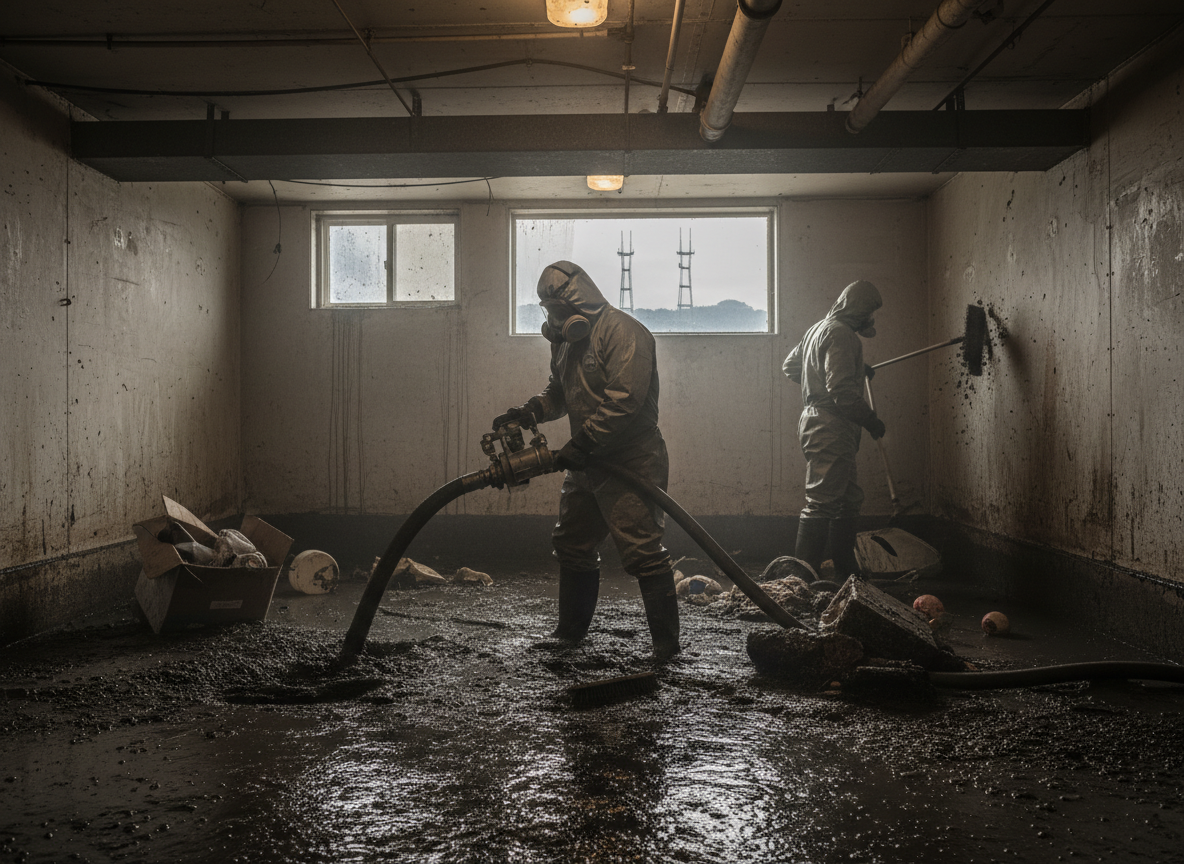
Sewage cleanup in Twin Peaks requires careful handling of older homes built on steep slopes where septic tanks are common. Cold winters often freeze vent lines and cause backups that push contaminated water into crawl spaces or lower-level rooms. Crews must account for limited access roads that become icy and the way snowmelt funnels additional water toward foundations along routes like CA-189.
San Bernardino County health rules govern disposal of extracted waste, so technicians separate solids and liquids on site before transport to approved facilities. Porous materials such as subflooring in 1970s-era cabins frequently require removal rather than drying because bacteria penetrate deeply in the damp mountain climate. Homeowners are advised against entering affected spaces until air quality testing confirms safe levels.
Edge cases include overflows that reach well heads or storm drains near Lake Arrowhead, which can trigger additional county reporting. Rapid extraction prevents mold growth that accelerates once temperatures rise in spring. Every job includes documentation of moisture readings at multiple depths to satisfy insurance adjusters familiar with Crestline and Twin Peaks claims.
Technician insight
In Twin Peaks, the thing that catches most people out with sewage cleanup is how winter snowmelt on steep grades pushes additional water into already stressed septic lines, turning a small backup into widespread contamination under older cabin foundations along CA-189.
Septic Overflow After Snowmelt
A Twin Peaks homeowner reported sewage surfacing in a lower bathroom after several days of melting snow. Inspection showed the line had frozen then thawed, allowing waste to migrate under the slab. Crews extracted the material, treated the soil pocket, and dried the subfloor before reinstalling finishes.
How it works
- 1
Site Assessment
Technicians inspect the source, map affected rooms, and test for hidden moisture behind walls or under floors common in Twin Peaks homes.
- 2
Containment And Extraction
Barriers isolate the area while pumps and vacuums remove standing waste, accounting for sloped lots that can redirect flow.
- 3
Cleaning And Disinfection
EPA-registered agents treat all surfaces, followed by removal of contaminated porous materials that cannot be salvaged in cold, humid conditions.
- 4
Drying And Verification
Industrial dehumidifiers and air movers run until readings meet industry standards, with final clearance testing before reentry.
Pricing
Cost depends on volume of waste, access difficulty on sloped lots, and whether structural materials must be removed.