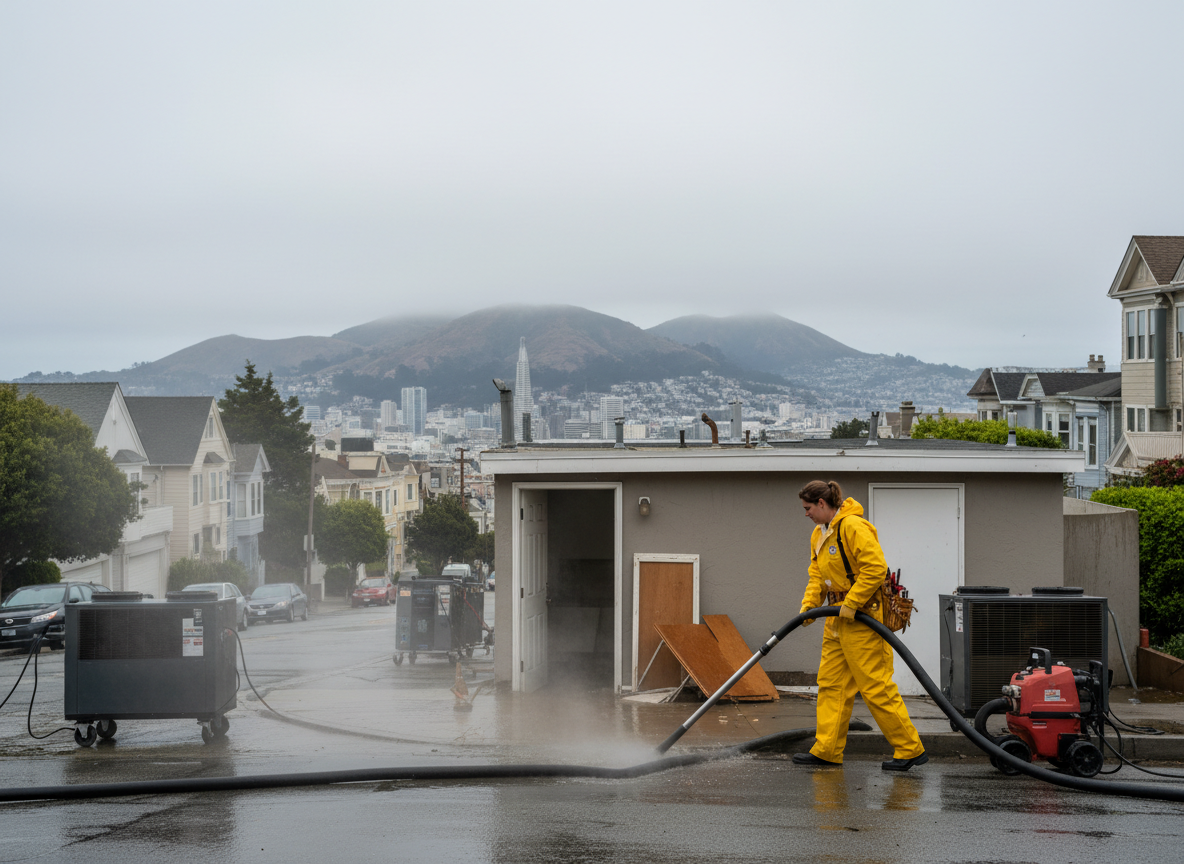
Twin Peaks sits at elevation in San Bernardino County where winter temperatures routinely drop below freezing, causing supply lines in crawl spaces and attics to burst inside older wood-frame cabins and 1970s tract homes. Water cleanup here starts with locating hidden saturation in tongue-and-groove subfloors and insulated wall cavities that standard fans miss. Crews use moisture meters and thermal imaging to map migration along the sloped lots common in the area before any drying begins.
Crestline and Lake Arrowhead properties often feature steep driveways and narrow access roads that limit equipment placement, forcing smaller extraction units and longer hose runs. After extraction, dehumidifiers must run longer because cold mountain air holds less moisture, slowing evaporation from hardwood floors and particleboard cabinets. Skipping this step lets residual dampness reach drywall seams and create hidden mold weeks later.
Seasonal Considerations
Winter snow load on roofs can force meltwater under flashing and into attics, while summer thunderstorms send runoff through poorly graded foundations on hillsides. Both patterns require different drying sequences than flatland jobs. Homeowners in Twin Peaks frequently discover water only after it reaches finished living areas, so cleanup includes lifting baseboards and checking behind built-in cabinetry typical of local construction.
Technician insight
In Twin Peaks, the thing that catches most people out with water cleanup services is meltwater from winter snow sitting under the house on sloped lots. Older cabins on CA-189 often have dirt crawl spaces that channel water straight into floor joists, and homeowners miss it until the living room floor feels spongy.
Attic Meltwater in Twin Peaks Cabin
After a heavy snow, water began dripping through a bedroom ceiling in a home off Kuffel Canyon Road. Inspection showed ice dam melt had entered the attic and soaked insulation over a 20-foot section. Extraction and targeted drying of the ceiling cavity prevented drywall failure and mold on the rafters.
How it works
- 1
Initial Assessment
Technicians arrive 24/7, document moisture levels with meters, and identify affected materials in crawl spaces and attics common to Twin Peaks homes.
- 2
Water Extraction
Portable pumps and wands remove standing water while navigating steep driveways and narrow lots found throughout the neighborhood.
- 3
Drying and Monitoring
Industrial air movers and dehumidifiers run until readings drop below 12 percent, with daily checks to account for cold mountain nights slowing evaporation.
- 4
Sanitizing and Final Walkthrough
Antimicrobial treatment is applied to wood framing and subfloors, followed by a walkthrough confirming no hidden moisture remains behind walls or under cabinets.
Pricing
Cost depends on square footage affected, depth of saturation into subfloors, and number of days drying equipment must remain on site.