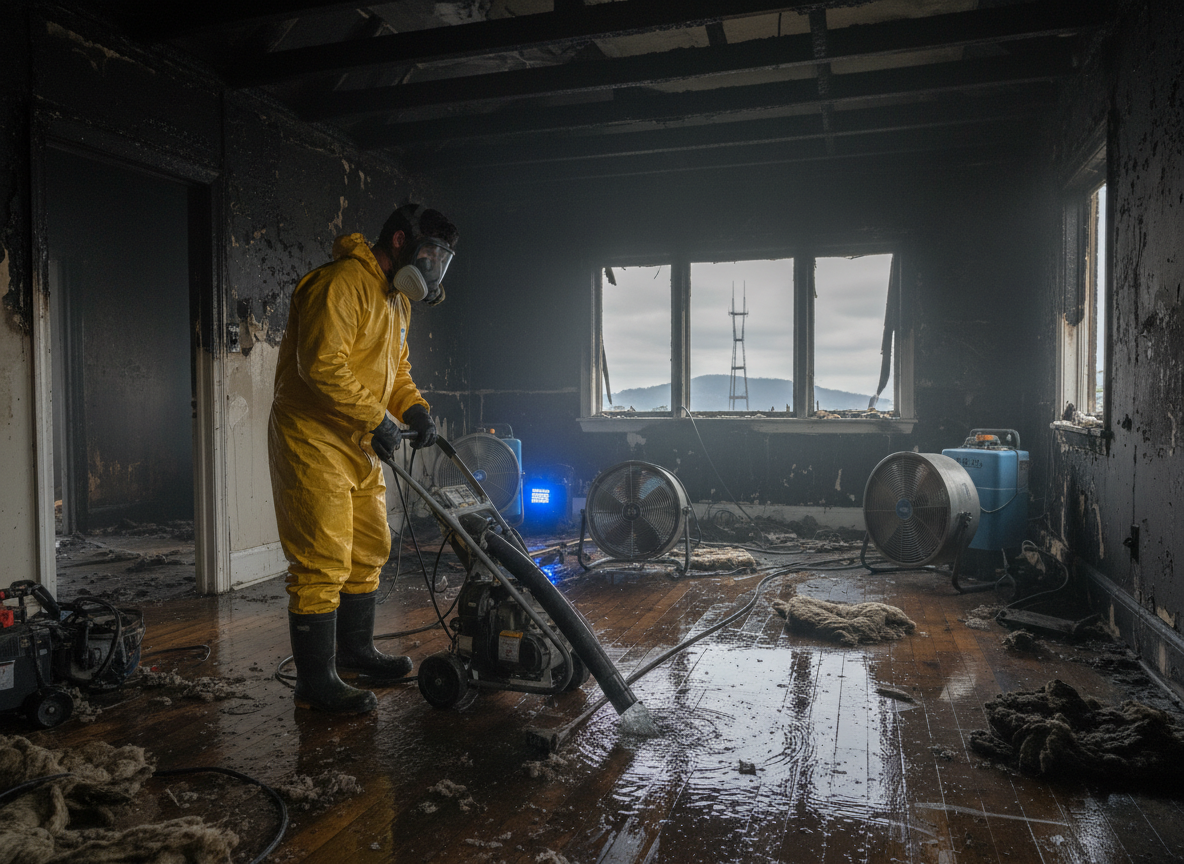
Twin Peaks sits at elevation in San Bernardino County where cold snowy winters and warm summers create distinct restoration challenges after structure fires. Suppression water often saturates older wood-framed homes built on steep slopes, driving moisture deep into subfloors and wall cavities that stay hidden until spring thaw. Soot from burning pine and cedar travels through HVAC systems common in these mountain cabins, requiring targeted cleaning of ductwork that runs through unconditioned attics exposed to freeze-thaw cycles.
Homeowners in Twin Peaks and nearby Crestline frequently discover secondary damage weeks after the fire when melted snow re-wets previously dried areas. Porous materials like drywall and insulation hold acidic soot that corrodes metal fasteners and electrical boxes if not fully removed. Restoration crews must work around narrow driveways and limited equipment access points typical of hillside lots while monitoring humidity levels that spike during afternoon summer thunderstorms.
Fire-related water events in Lake Arrowhead and Twin Peaks neighborhoods often involve mixed debris from burned roofing and insulation that clogs floor drains and sump pits. Technicians extract standing water first, then use air movers and dehumidifiers sized for the tight floor plans of older cabins. Continuous moisture mapping prevents hidden mold growth during the long drying periods required when daytime highs drop below freezing.
Technician insight
In Twin Peaks the thing that catches most people out with water damage remediation after fire is how quickly suppression water freezes inside wall cavities during a January cold snap. Older cabins along CA-189 often have balloon framing that lets meltwater travel two stories down before anyone notices, so we always pull baseboards on the lower level even when the fire was upstairs.
Crestline Cabin Post-Fire Water Event
A structure fire in a 1970s cabin near Lake Arrowhead sent suppression water into the crawlspace. We found saturated insulation and charred joists holding pockets of ice that had not dried after two weeks of below-freezing nights. Extraction and targeted drying prevented mold before reconstruction started.
How it works
- 1
Initial Assessment
Technicians arrive within hours, document all affected rooms, and map moisture in walls, floors and ceilings using meters suited to mountain construction.
- 2
Water Extraction
Standing water and saturated debris are removed with truck-mounted equipment that handles the steep access roads common around Twin Peaks.
- 3
Soot and Residue Cleaning
HEPA vacuuming and specialized cleaners remove acidic soot from surfaces before secondary damage sets in during cold weather.
- 4
Drying and Monitoring
Industrial drying equipment runs until moisture readings return to normal, with daily checks accounting for overnight temperature drops.
- 5
Final Clearance
All materials are inspected and documented before reconstruction begins, ensuring no hidden moisture remains in cavities.
Pricing
Cost depends on square footage affected, depth of water penetration into older framing, and whether winter access restrictions apply.