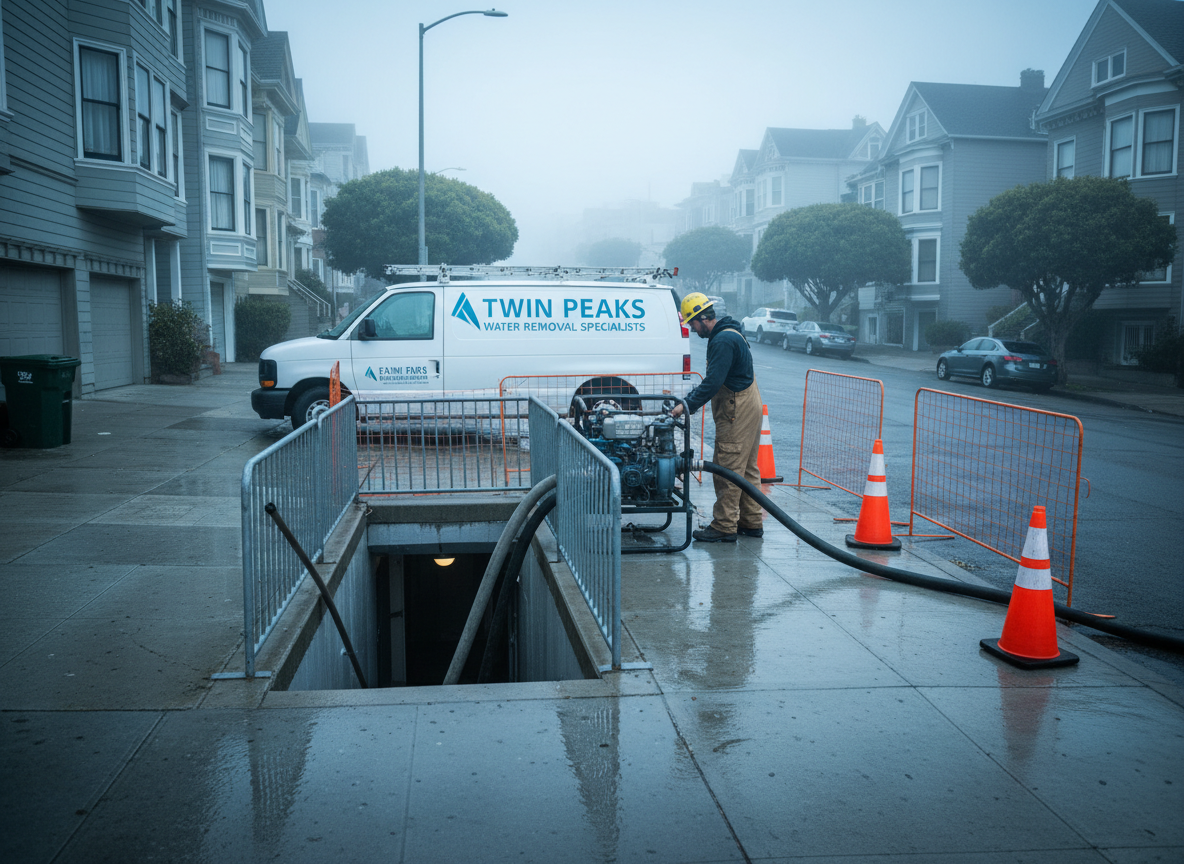
Twin Peaks sits in the San Bernardino Mountains where heavy winter snow followed by rapid warming creates sudden runoff that pools against foundations and enters crawl spaces. Older single-story homes along CA-189 and side roads often have pier-and-beam construction with limited access, so extraction crews must pull carpet and pad quickly before moisture migrates into subfloors. Portable extractors with high-pressure wands reach under cabinets and into corners where standing water hides after roof leaks or overflowing gutters common in Crestline and Lake Arrowhead overflows.
Once visible water is removed, hidden moisture in insulation and wall cavities must be tracked with moisture meters because the cold mountain air slows evaporation. Technicians cut small inspection holes in drywall rather than tearing entire walls when water has wicked up from slab edges during spring thaws. Equipment placement matters on steep driveways; generators and dehumidifiers are staged on level ground to avoid tipping while running continuous cycles through the night.
San Bernardino County homes in Twin Peaks frequently lack modern vapor barriers under crawl spaces, allowing groundwater to re-enter after extraction if not addressed. Crews document every step with photos for insurance adjusters who visit from the valley, noting how snow load on roofs can push water through flashing that was never designed for sustained winter moisture.
Seasonal Water Intrusion Risks
Winter snowmelt and spring rains push water through older mountain foundations faster than summer monsoon events. Homeowners who wait until visible puddles appear often find moisture already in subfloor plywood that requires targeted removal rather than simple drying.
Technician insight
In Twin Peaks the thing that catches most people out with water extraction is how fast snowmelt from the ridgeline runs under older homes along CA-189 and soaks the dirt under pier-and-beam floors before anyone notices. Once that happens the plywood starts cupping and you cannot just pull the water; you have to open the floor to reach it.
Crawl Space Flood After Heavy Snow Melt
A Twin Peaks home near the highway saw water enter the crawl space after a rapid thaw. Extraction crews found standing water under the insulation touching the subfloor. They removed the water, placed drying equipment through access panels, and returned daily until moisture readings matched the dry winter air outside.
How it works
- 1
Site Assessment
Technicians arrive within hours, measure standing water depth, and locate all affected rooms including hidden areas under cabinets and in crawl spaces typical of Twin Peaks homes.
- 2
Water Removal
High-capacity extractors pull water from carpets, pads, and hard surfaces while routing hoses to exterior drains or trucks to prevent re-soaking on sloped lots.
- 3
Moisture Mapping
Infrared cameras and meters identify remaining damp areas in walls and floors so drying focuses on actual water paths created by mountain runoff.
- 4
Equipment Setup And Monitoring
Air movers and dehumidifiers run continuously with daily checks until readings return to normal for the local climate.
Pricing
Cost depends on water volume, access difficulty on mountain lots, and whether hidden moisture requires additional wall or floor opening; upfront quotes given after assessment.