2026-10-15 ·
How to Check for Water Intrusion After Heavy Winter Storms Near Lake Arrowhead
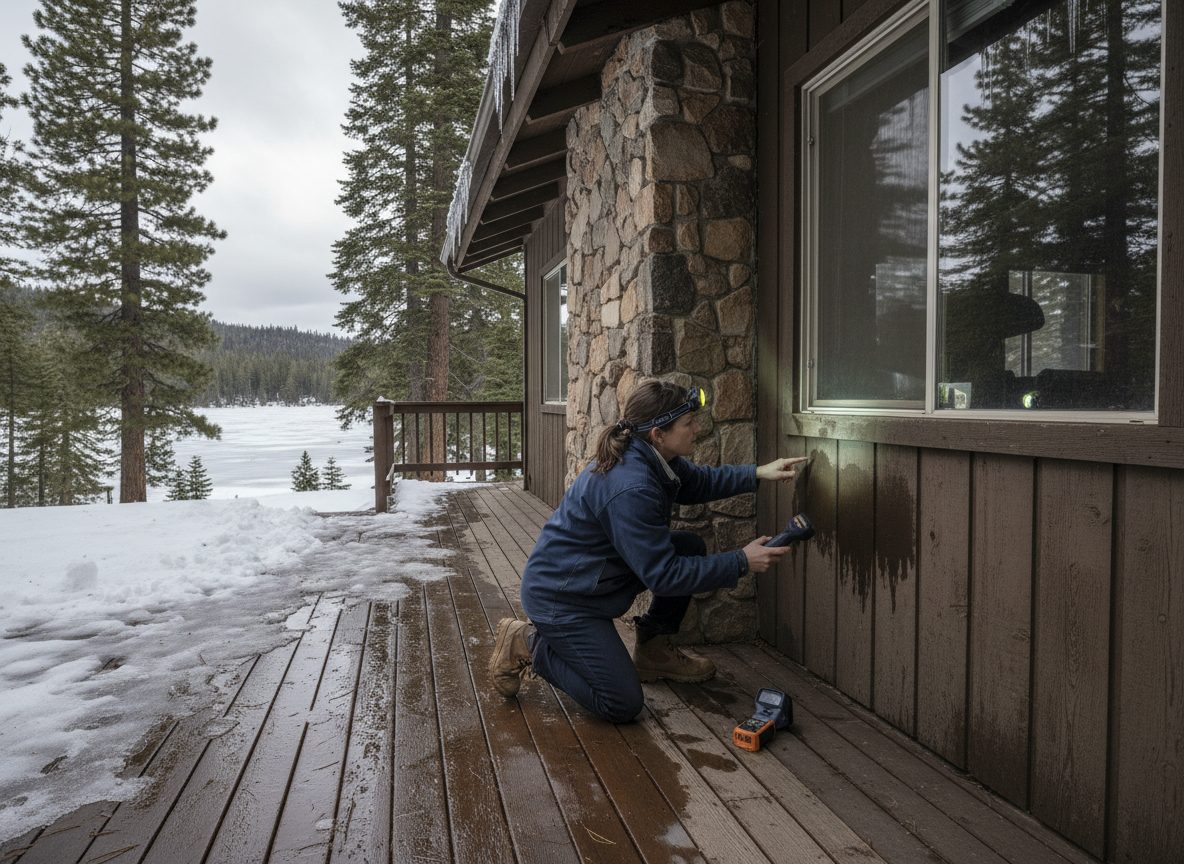
After heavy winter storms near Lake Arrowhead, begin checking for water intrusion by examining roofs, attics, and foundations within 48 hours once snow starts to melt. Twin Peaks homes sit in San Bernardino County mountain terrain where cold snowy winters drive repeated freeze-thaw cycles that crack shingles and force water under flashing. Start at the roofline and work downward, using a bright flashlight and moisture meter on wood surfaces to catch damp spots before mold sets in.
Inspecting Roofs and Attics
Twin Peaks cabins built decades ago often have older asphalt shingles that absorb meltwater when heavy snow loads sit for weeks. Walk the perimeter with binoculars first and look for lifted edges, missing granules, or ice dams along the eaves. Inside the attic, shine a light along rafters and check insulation for dark stains or compressed areas where water has pooled. Pay special attention to valleys and chimney flashings, common entry points when runoff from nearby Crestline slopes increases. If you find damp cellulose insulation, remove and replace it promptly to prevent hidden mold growth above living spaces.
Checking Walls and Ceilings
Water that enters through roof penetrations often travels down interior walls in Lake Arrowhead-area homes before showing on drywall. Press your palm against baseboards and look for soft spots or discoloration at ceiling corners where roof leaks typically track. In Twin Peaks homes with vaulted ceilings, use a moisture meter on the underside of roof decking during the first warm spell after a storm. Stains that appear weeks later usually trace back to ice dams that formed along the north-facing slopes common in this part of San Bernardino County.
Examining Foundations and Crawl Spaces
Snowmelt from surrounding hills frequently saturates soil around older Twin Peaks foundations, pushing water through cracks in stem walls or under sill plates. Enter the crawl space with a headlamp and check for standing water or damp soil against the perimeter. Look for white efflorescence on concrete and soft spots in subfloor plywood where water has wicked upward. Homes near Lake Arrowhead often sit on sloped lots where drainage channels can clog with pine needles and redirect runoff directly against the house during spring thaw.
Testing Floors and When to Seek Help
Hardwood and laminate floors in Twin Peaks cabins can cup or buckle when water sits beneath them after winter storms. Lift a few vent covers and check the subfloor with a moisture meter; readings above 15 percent indicate trapped moisture that needs professional drying. For persistent dampness or musty smells, review the steps in Typical Costs for Drying and Repairing Water-Damaged Floors in Twin Peaks Cabins before odors spread. When intrusion reaches multiple rooms or the crawl space stays wet, contact a local team offering water damage mitigation that serves the 92391 area 24 hours a day.