2026-10-15 ·
Removing Musty Odors from Basements After Spring Runoff in Twin Peaks
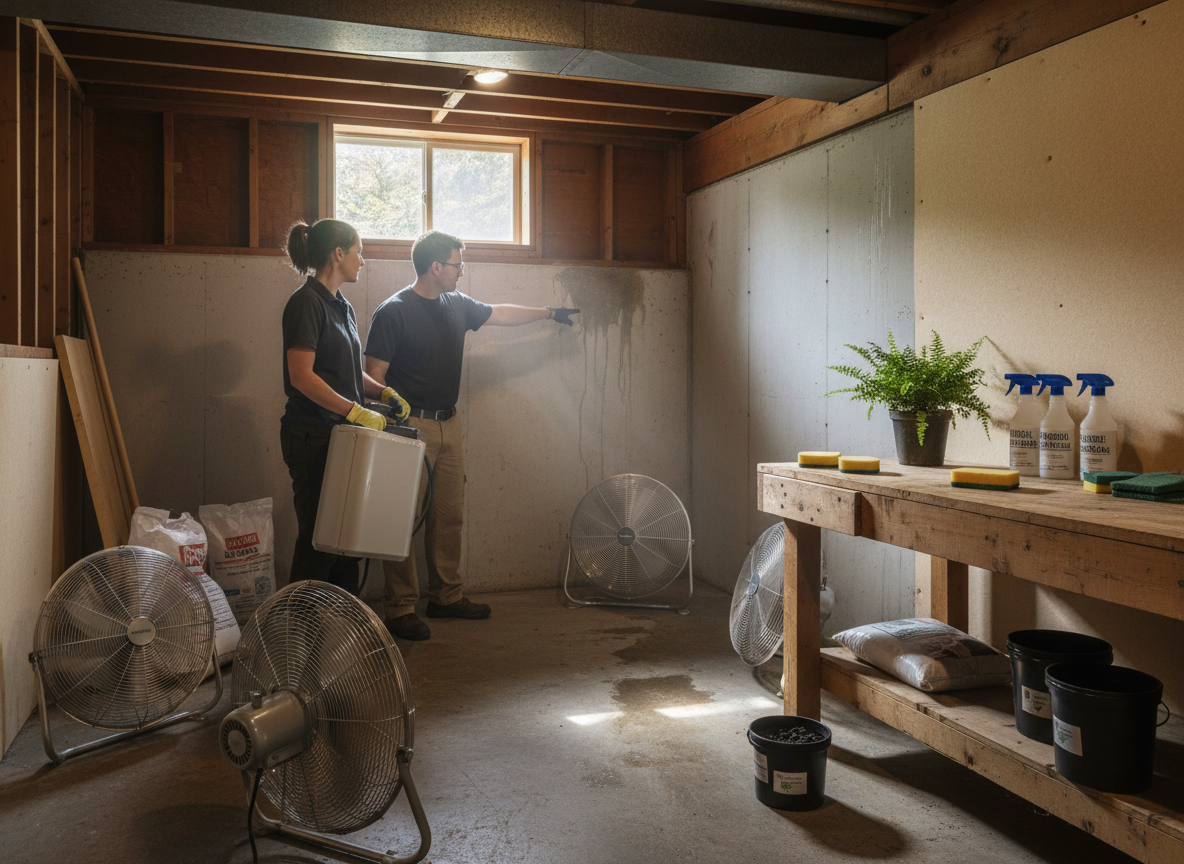
Spring runoff in Twin Peaks commonly pushes water through foundations and into basements of cabins built on slopes in San Bernardino County. The direct way to remove musty odors is to eliminate standing water and hidden moisture within 48 hours, followed by antimicrobial cleaning and continuous airflow until relative humidity stays below 50 percent.
Understanding Spring Runoff Effects on Twin Peaks Basements
Twin Peaks sits at elevation in the San Bernardino Mountains where heavy winter snowpack melts rapidly once temperatures rise in March and April. Water follows gravity down slopes toward Lake Arrowhead and Crestline, seeping through concrete block foundations and dirt crawl spaces common in local cabins. Older homes often lack modern vapor barriers, so moisture lingers in subfloor insulation and sill plates long after visible puddles disappear. This trapped water feeds mold and bacteria that produce the signature musty smell. Crews working these jobs notice the odor intensifies in north-facing basements that receive less sun and stay cooler year-round.
Locating Hidden Moisture Sources
Start by checking the lowest points near the foundation walls and around any sump pits. Use a moisture meter on drywall up to 18 inches above the floor and on wooden joists. Pay attention to areas where plumbing enters from outside, especially in homes near the 26100 block of CA-189 where older galvanized lines are still common. Runoff from surrounding ridges can also enter through window wells or grading that slopes toward the house. Document every wet spot before beginning removal so you can verify drying progress later.
Drying and Cleaning Steps That Eliminate Odors
Extract all free water first with a submersible pump or wet vac, then set up air movers and dehumidifiers rated for at least 70 pints per day. Aim for 3-5 air changes per hour in the basement space. Once surfaces reach 12 percent moisture content or lower, apply an EPA-registered antimicrobial to affected wood and concrete. Follow with a HEPA vacuum to remove any loosened spores. For persistent smells, fogging with an odor-neutralizing agent after drying often clears residual odors that simple cleaning misses. Keep equipment running until a thermo-hygrometer shows stable readings below 50 percent RH for 48 consecutive hours.
Homeowners in nearby Crestline and Lake Arrowhead report success combining these steps with basement flood cleanup techniques that address both water and the resulting mold growth. Always wear proper PPE and ventilate to the exterior during cleaning.
Preventing Recurrence in Mountain Climate Homes
Re-grade soil around the foundation so it slopes away at least 6 inches over 10 feet. Install or upgrade French drains if water consistently enters from the uphill side common in Twin Peaks terrain. Add vapor barriers and insulation on crawl space floors to reduce humidity migration into living areas. Check gutters and downspouts every fall before snow arrives to ensure they direct water at least 5 feet from the house. These measures cut the volume of spring runoff that reaches basements and reduce future odor problems.
For homes that have already experienced repeated intrusion, review the guidance in how to check for water intrusion after heavy winter storms near Lake Arrowhead before the next melt season begins.