2026-10-15 ·
What to Inspect After Firefighting Water Use in San Bernardino National Forest Homes
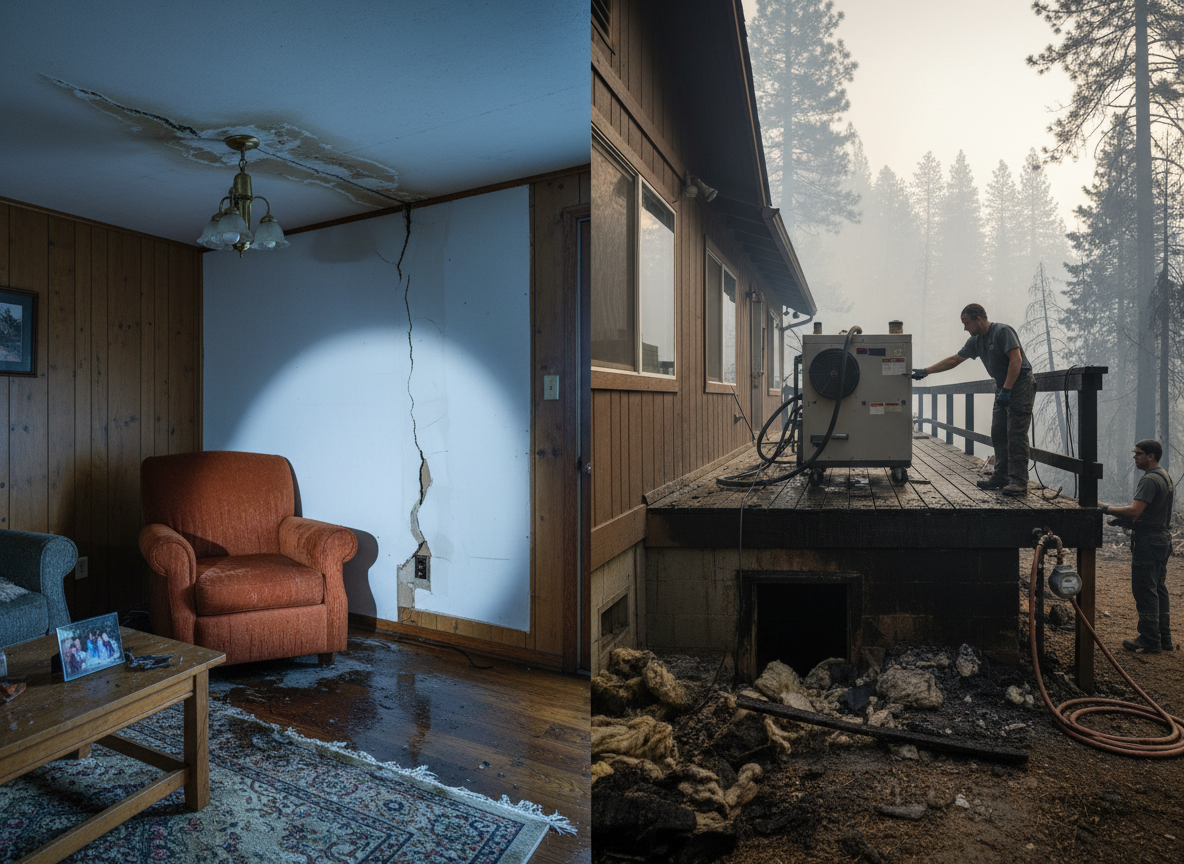
Firefighting water in San Bernardino National Forest homes around Twin Peaks often leaves hidden pockets in attics, wall cavities, and under floors that take 3–7 days to surface visibly. Cabins built on sloped terrain with wood framing absorb and trap moisture faster than newer builds, especially when temperatures drop below freezing in winter and slow natural evaporation. Start by checking ceilings for sagging or discoloration, then move to baseboards and electrical outlets for dampness or corrosion.
Attic and Roof Cavity Checks
Twin Peaks cabins near the forest edge frequently see water from aerial drops or hose lines pool in roof valleys and insulation layers. Probe insulation with a moisture meter in multiple spots, focusing on areas above bathrooms and kitchens where pipes run. Remove wet batts immediately to avoid compression that reduces R-value by half within weeks. Check rafters for soft spots or mold streaks along nail lines, as the area's cold snowy winters trap humidity under snow load. Homeowners in nearby Crestline report similar issues after containment efforts, where delayed drying leads to rot in 4–6 weeks if temperatures stay below 50°F.
Wall and Foundation Inspection Steps
Examine interior walls by cutting small inspection holes at base level every 4–6 feet, particularly on the downhill side of lots common in Twin Peaks. Firefighting water migrates along sill plates and into rim joists, creating conditions for decay in older 1970s–1990s stock. Use infrared cameras to spot temperature differences indicating trapped moisture behind drywall. Foundations on granite-heavy soil in San Bernardino County drain slowly, so test soil moisture 12 inches out from the stem wall. Link to water damage remediation after fire services when readings exceed 18% on wood members.
Flooring and Subfloor Evaluation
Lift carpet edges and check hardwood for cupping, which appears within 10–14 days in Twin Peaks' variable mountain climate. Subfloors in crawl spaces often hold water from runoff during spring melt, compounding firefighting saturation. Measure moisture in plywood at multiple points; replace sections showing above 16% to prevent buckling. Concrete slabs under tile can retain water for months if vapor barriers are absent, common in forest cabins. Review typical costs for drying and repairing water-damaged floors in Twin Peaks cabins before scheduling full replacement.
Mold and Odor Monitoring
Musty smells often emerge 5–10 days post-incident in Twin Peaks basements due to the area's high humidity swings between summer warmth and winter snow. Sample air in closed rooms and inspect behind appliances where water pooled. Address growth early on OSB sheathing or joists to avoid spreading through HVAC returns. Removing musty odors from basements after spring runoff in Twin Peaks follows similar steps, though firefighting water carries additional sediment that accelerates staining on concrete.
Final Documentation and Next Actions
Photograph all affected areas with timestamps and meter readings before any demolition. Track drying with daily logs for 7–14 days using dehumidifiers sized at 30–50 pints per day for average 1,200-square-foot cabins. If readings do not drop below 12% on wood, consult professionals familiar with San Bernardino National Forest properties. Owners in Lake Arrowhead face comparable terrain challenges that extend drying times by 2–3 days compared to valley locations.